Why CFA Candidates Fall into the Illusion of Knowing—and How to Break Free
You’re reading your notes.
You see a formula.
It looks familiar.
You nod.
You move on.
In that moment, you believe you know it.
But you don’t.
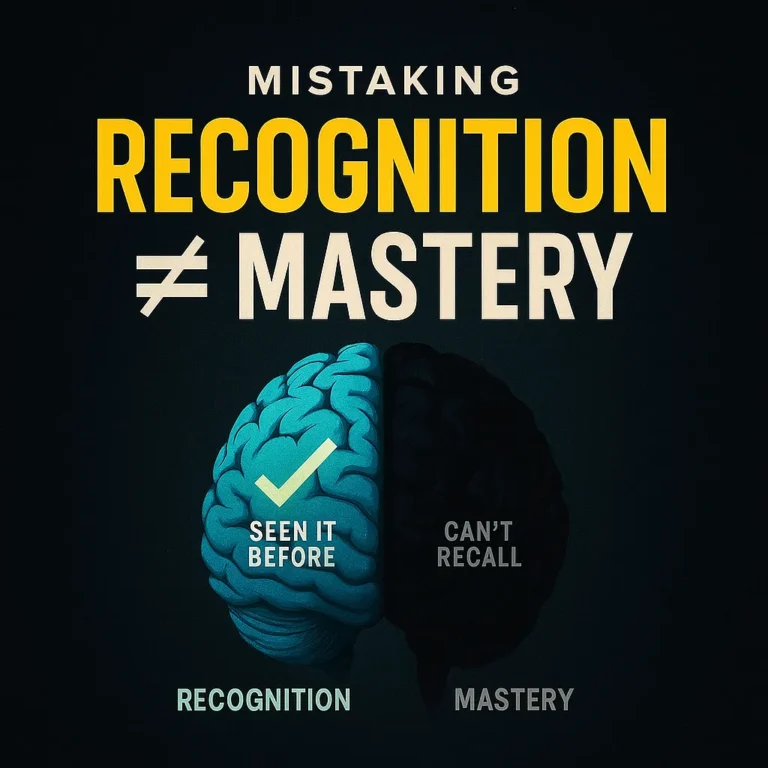
You’ve confused recognition with mastery. And that mistake could cost you the exam.
Recognition Feels Good. Too Good.
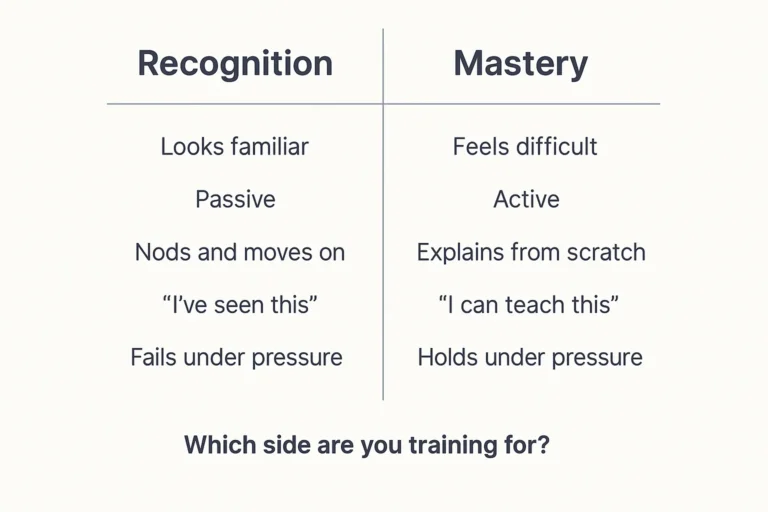
Recognition is effortless. It’s passive.
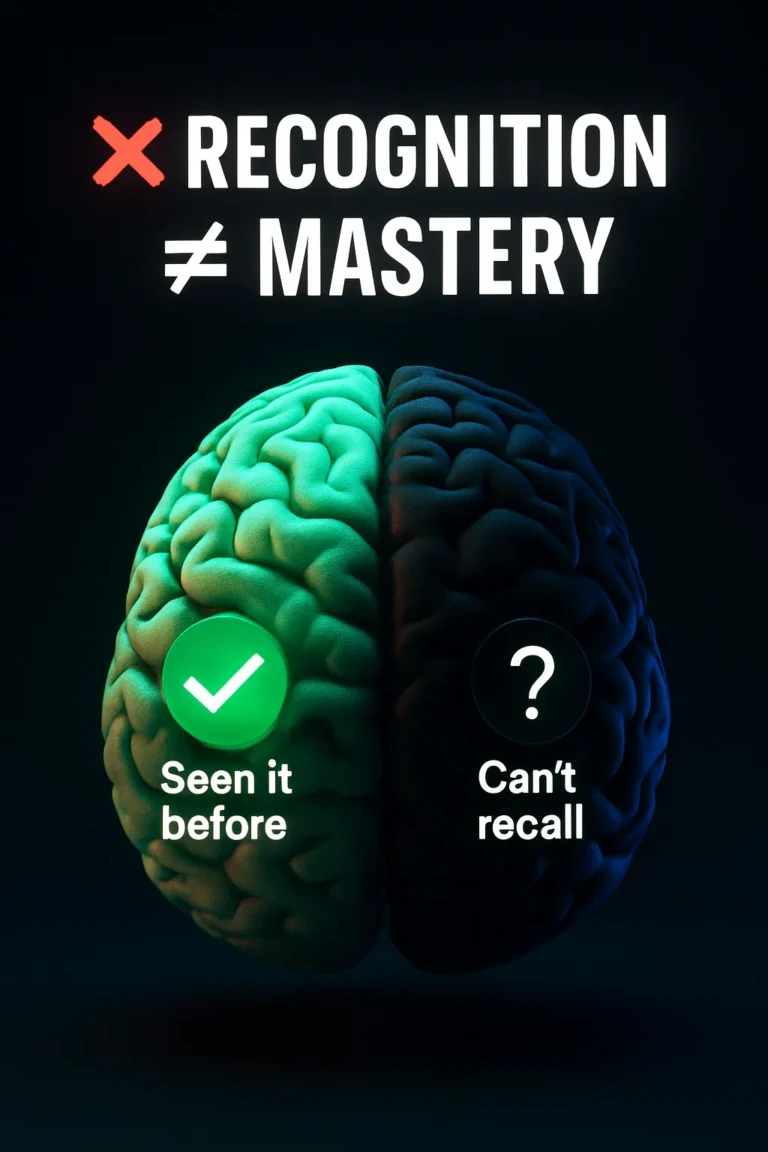
You look at something and your brain lights up with I’ve seen this before. It creates the illusion of competence. You feel like you know it—because you’ve seen it before.
But here’s the problem:
Recognition doesn’t prove you can recall it.
And it definitely doesn’t mean you can apply it.
In the CFA exams, recognition is irrelevant.
There’s no list of formulas to match. No glossary of definitions to choose from. No “seen this before” dopamine hit.
It’s just you.
The clock.
And a blank screen.

Mastery Is Uncomfortable
Mastery is the opposite of recognition.
It’s uncomfortable. Demanding. Slow.
It asks questions like:
Can you write this formula from memory?
Can you explain this concept to someone who’s never studied finance?
Can you apply it under pressure, when it’s wrapped in a paragraph-long vignette with intentionally misleading context?
That’s not recognition. That’s retrieval.
That’s synthesis.
That’s mastery.
The Recognition Trap in CFA Prep
Here’s how the trap plays out for most CFA candidates:
You watch a video → nod along → feel good
You reread a passage → highlight some lines → feel good
You see a formula → it looks familiar → feel good
No friction. No resistance.
Just false comfort.
Then exam day comes. And suddenly:
You can’t remember the full formula
You get the concept backwards
You confuse similar-sounding definitions
You run out of time trying to recall what you thought you knew
Recognition didn’t fail you.
It fooled you.
How to Train for Mastery
If you want to pass the CFA exam, you need to train the way you’ll be tested.
And that means replacing passive review with active performance.
1. Use Active Recall
Don’t look at the formula. Write it from memory.
Don’t reread the definition. Try to explain it aloud.
Don’t recognize it—retrieve it.
2. Practice Application, Not Familiarity
Look for question stems that twist, invert, or disguise the concept.
Don’t fall in love with examples that look like textbook templates.
Get messy. Build range.
3. Stress-Test Your Knowledge
Use mock exams. Timed quizzes. Randomized question sets.
Push your brain to recall when it’s tired, distracted, or unsure.
You don’t need memory under perfect conditions. You need it under pressure.

Final Thoughts
Recognition is easy. That’s why it’s seductive.
But mastery is what the CFA exam demands.
So next time you catch yourself saying, “I know this,” stop.
Close the book.
Turn away from the screen.
And ask: Could I retrieve this if the exam started right now?
That’s the test that matters.
And it’s the one that will separate those who feel prepared from those who are.