CFA candidates don’t fail because they lack intelligence (hardly).
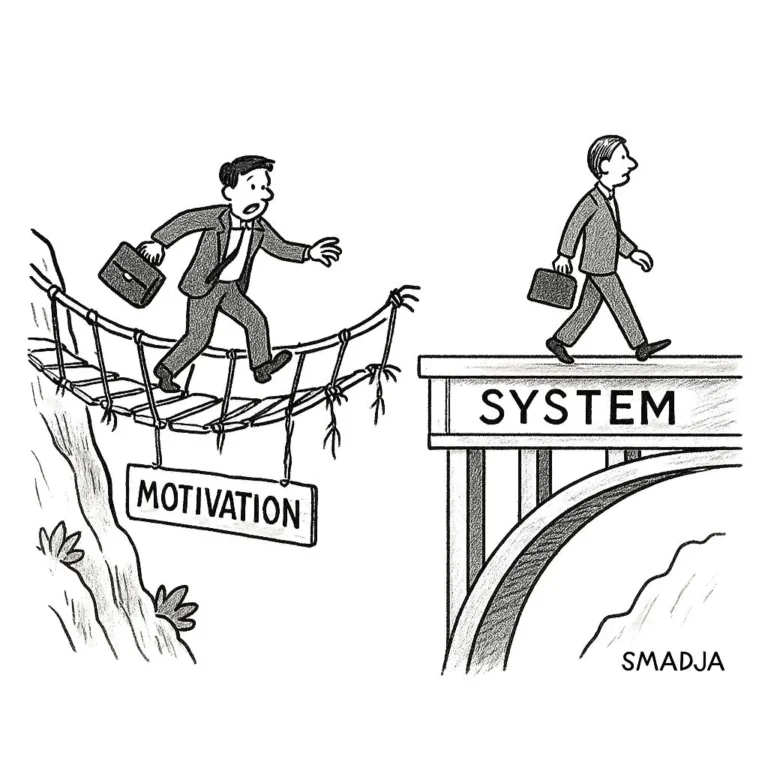
They fail because they rely on motivation.
Every year, tens of thousands of smart, capable professionals begin their CFA journey with good intentions.
They build plans. They buy prep packages. They tell themselves, “This time, I’ll be consistent.”
And for a few weeks, they are.
But then the inevitable happens—long hours at work, family responsibilities, mental fatigue. The schedule slips. The motivation fades.
They fall off track.
And that’s when the real issue shows up:
They were never running a system. They were running on hope.
Systems Thinking: Lessons from Engineering and Process Design
In manufacturing and systems engineering, consistent performance depends on a stable, repeatable process.
Taiichi Ohno, architect of the Toyota Production System, emphasized standard work as the foundation of quality. Without a defined process, there can be no improvement, no measurement, and no control.
“Without standards, there can be no kaizen.” — Taiichi Ohno
CFA candidates face the same challenge.
Without a standard study rhythm, their preparation becomes reactive.
They study when they feel good. They study when they panic. They study when they find the time.
That variability is what destroys momentum.
W. Edwards Deming, one of the most influential figures in quality management, famously said:
“You do not rise to the level of your goals. You fall to the level of your systems.”
This insight is especially true for long, high-pressure exams like the CFA.
Ambitious goals without stable systems only create frustration.

What a CFA Study System Actually Looks Like
A system is not just a calendar.
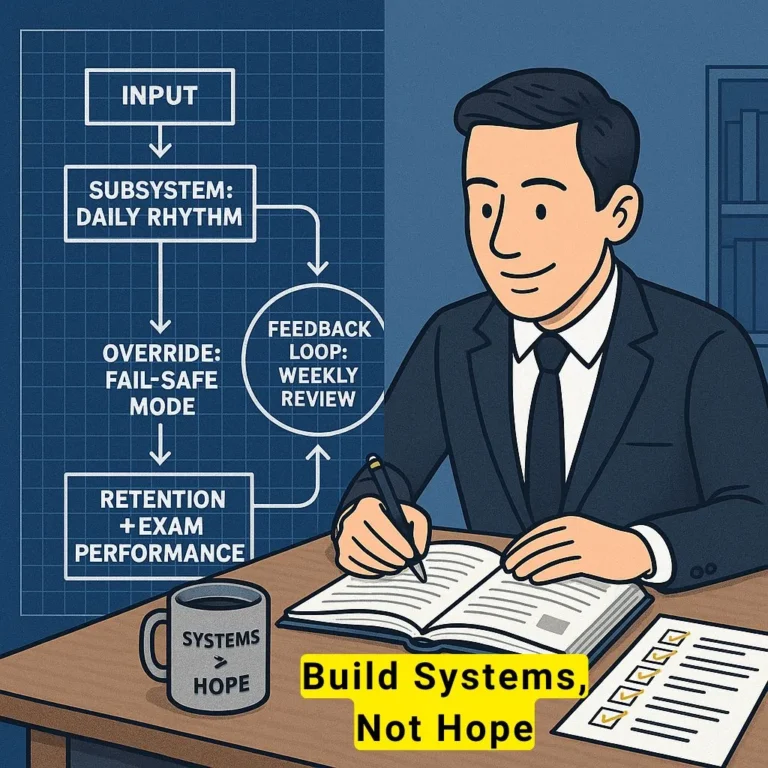
A system is a process with rules, feedback loops, and resilience.
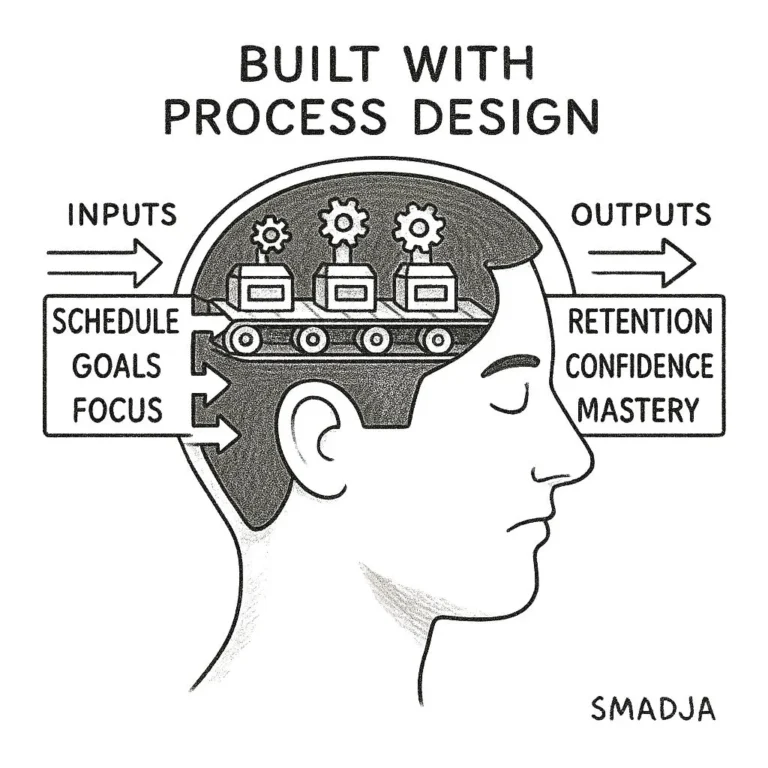
From an operations perspective, you want a low-variance, high-output process. In CFA terms, that means:
A fixed study rhythm. Same time. Same days. Same conditions.
Clear session objectives. Each session solves a defined problem.
Progress tracking. Not vague feelings, but actual metrics—readings covered, questions answered, retention tested.
Fail-safe protocols. On bad days, reduce scope, not frequency. Always study, even if only for 20 minutes.
Review loops. Every system needs checkpoints. Weekly summaries, spaced repetition, and mock exam benchmarks.
This isn’t about rigidity.
It’s about engineering reliability.
The goal is to reduce dependence on emotion.
To ensure that even when energy dips, progress continues.
Learning from Aerospace and Redundancy Planning
NASA doesn’t design spacecraft assuming ideal conditions.
They design for failure.
Every mission includes redundancy protocols—fail-safes that ensure essential functions continue even when key systems go offline.
You must do the same.
Your study system should not depend on a “good day.”
It should function on your worst day.
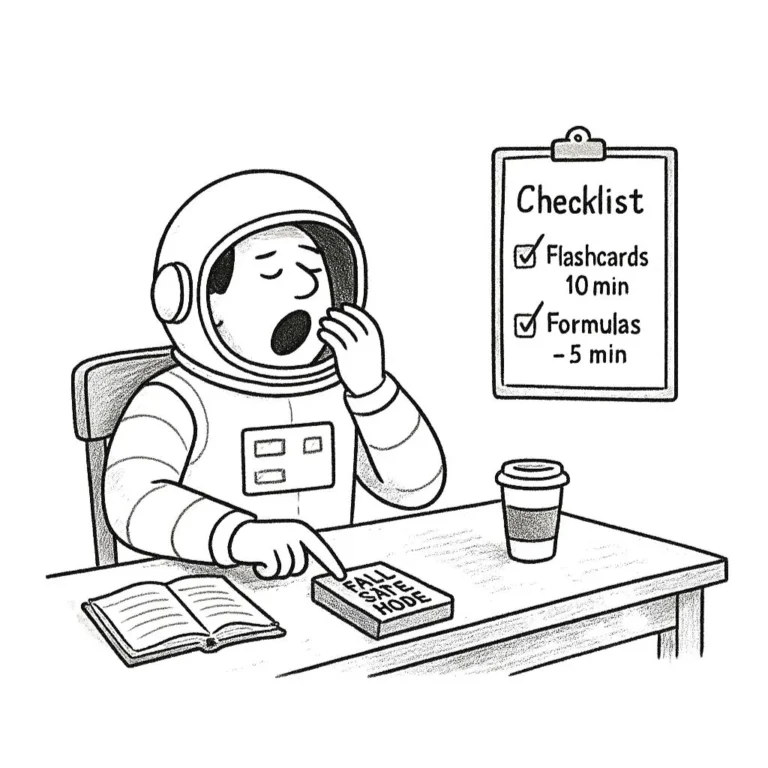
This is what we call Fail-Safe Mode:
A minimal-effort study protocol for days when you’re tired, stressed, or short on time.
Example: 10 flashcards, 5 questions, or 15 minutes of review.
The purpose is to protect rhythm—not maximize performance.
One skipped session is recoverable.
Three skipped sessions often spiral into collapse.
Your CFA engine must keep running—even in low gear.
From Emotion to Identity: The Habit Design Shift
James Clear, author of Atomic Habits, draws a powerful distinction between goal-based behavior and identity-based behavior.
Goal-based candidates ask:
“How do I stay motivated to study?”
Identity-based candidates say:
“I’m someone who studies.”
This is the difference between chasing outcomes and building character.
A system is not just a tool—it’s a signal to yourself.
It reinforces that you are a disciplined professional. That you take your preparation seriously. That you treat your time and your growth with respect.
Professionals in medicine, aviation, and finance rely on checklists, simulations, and standard operating procedures—not because they’re lazy, but because performance depends on removing unnecessary decision-making.
CFA candidates should think the same way.
You’re not just learning finance.
You’re training to make decisions under pressure.
And you can’t build that capacity without structure.
Final Thoughts
Motivation is fleeting.
Hope is fragile.
Systems are durable.
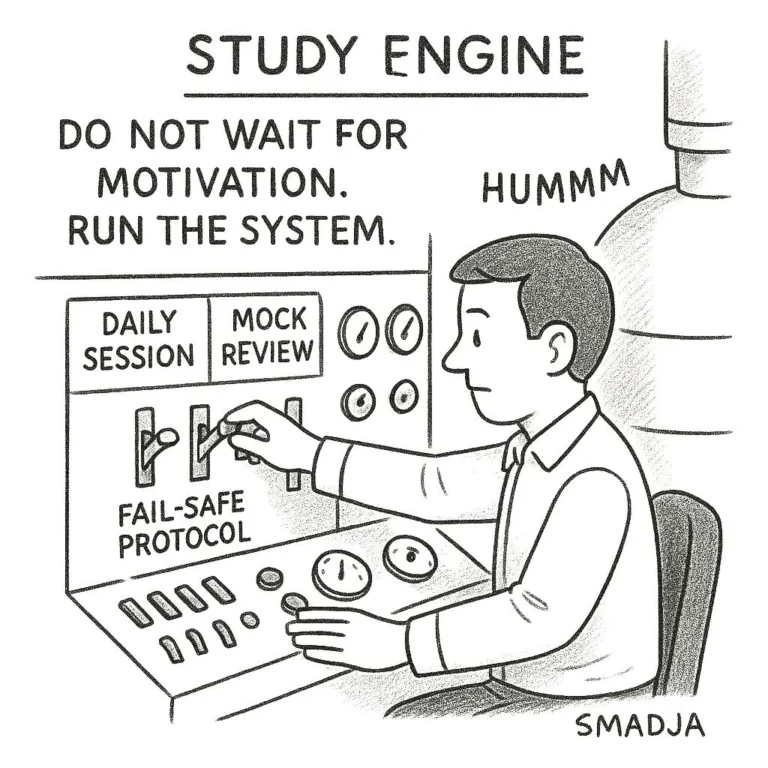
You cannot afford to design your CFA preparation around how you feel.
You must design it around what works.
When your study rhythm is fixed, your review is scheduled, and your fallback protocols are in place, you are no longer hoping for success.
You are engineering it.
So build a system.
Not for your perfect self—but for your real self.
Because that’s the self who’ll be sitting in front of the exam.